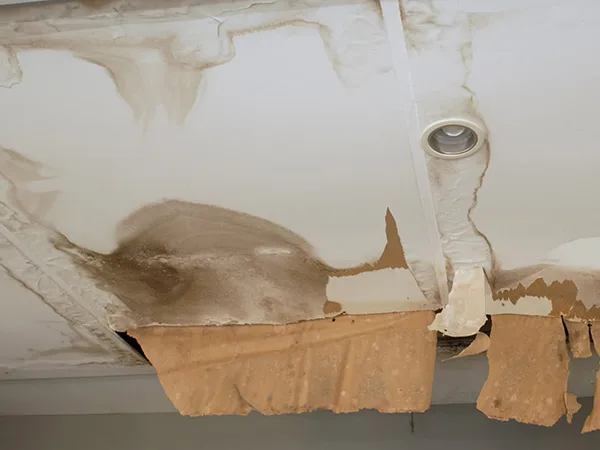


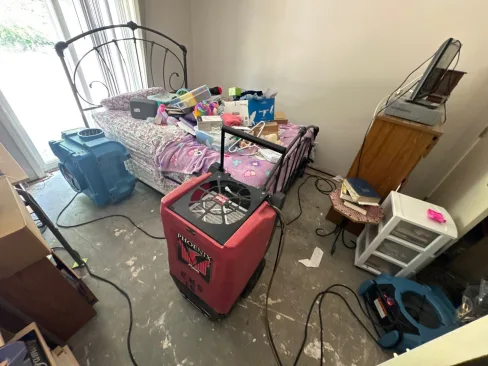
When rising flood water pushed Category 3 water into Village Gardens Apartments in June 2026, the loss didn’t stop at one unit. Four occupied apartments, two building entryways, two shared laundry rooms, and a basement across five buildings took water at once. Emergency Mitigation Services extracted the flood water, cut affected drywall to a uniform four-foot height, protected tenants’ belongings in place, and ran nine simultaneous drying chambers — 65 air movers, 9 dehumidifiers, and HEPA air scrubbers — then treated every affected area with antimicrobial fogging appropriate for contaminated flood water. Seven days after equipment set, every monitored material in every chamber had reached its documented dry standard.
Services Provided
Flood Water Extraction, Structural Drying & Antimicrobial Sanitation
Client
Curry Investment Co
Job Location
Kansas City, MO
Property Type
Multi-Building Apartment Community (occupied units)
Cause of Loss
Rising flood water — Category 3
Project Duration
11 days total · Equipment run Jun 4–11
Date of Loss
June 1, 2026
EMS Location
9
Drying chambers
5
Buildings affected
65
Air movers + 9 dehumidifiers
7
Days to verified dry standard
Project Overview
One storm, nine losses, all at once
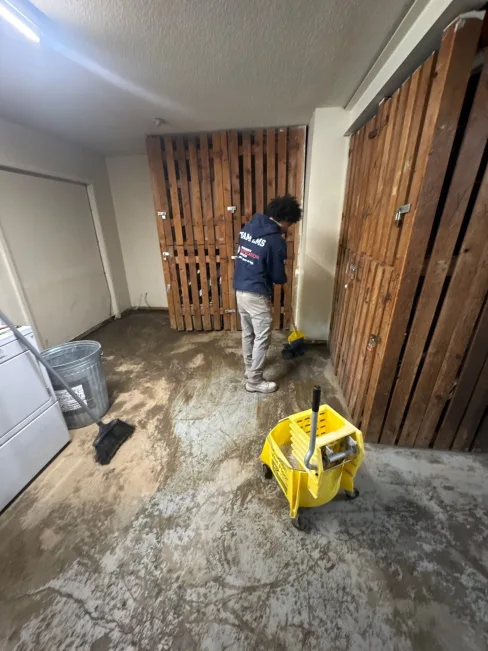
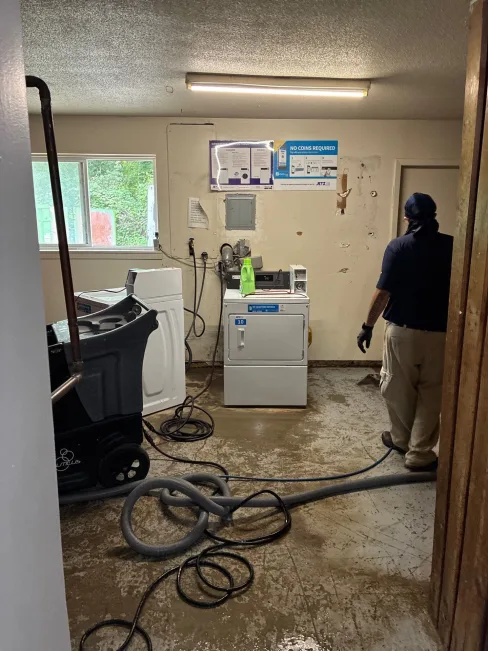
A multi-family flood is a different kind of loss. When rising water moved through Village Gardens Apartments on June 1, 2026, it didn’t produce one damaged room with one drying plan — it produced nine separate affected areas spread across five buildings: ground-floor apartments in Buildings 47 and 49, the shared entryways serving both, the community laundry rooms in Buildings 45 and 9, and the basement under Buildings 27–29. The water was Category 3 — outdoor flood water carrying mud, debris, and contamination — which set the rules for everything that followed: what had to be removed, how surfaces had to be treated, and what “clean” would have to mean before the work was done. And the property was occupied. Tenants were living in these units. The mitigation plan had to remove contaminated material and dry the structure without displacing residents any more than the flood already had — which meant protecting belongings in place, keeping pathways functional, and running equipment around people’s daily lives.
On-Site Inspection
Metering every room before moving a single fan
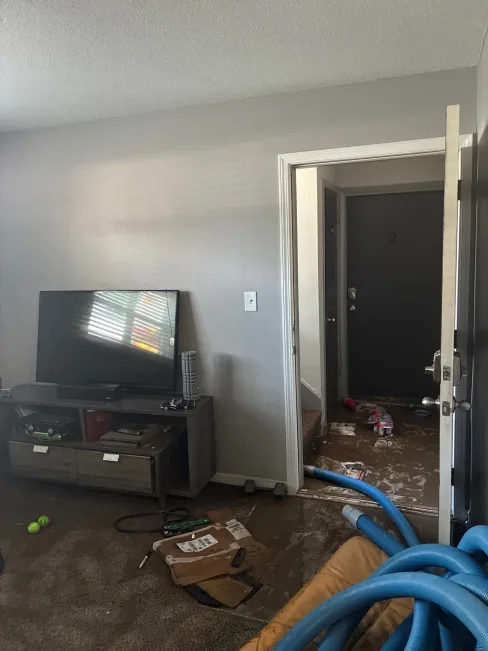
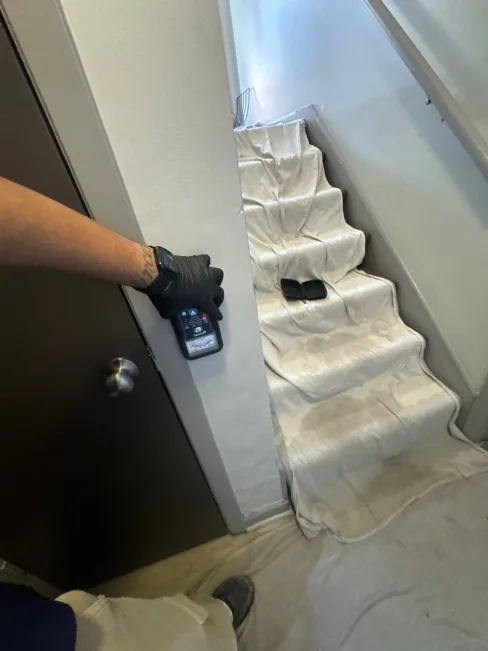
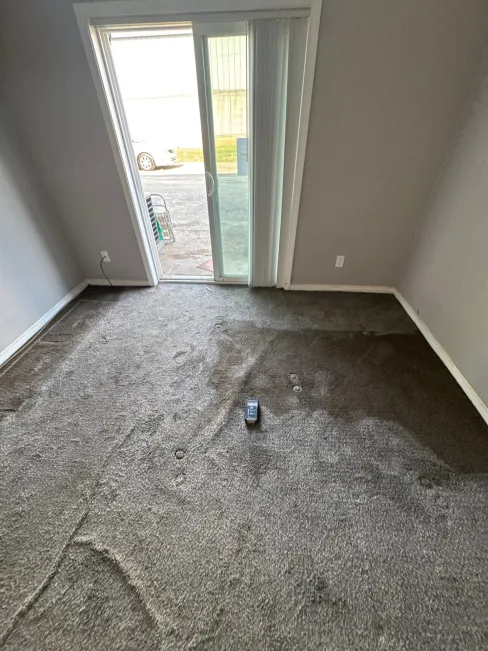
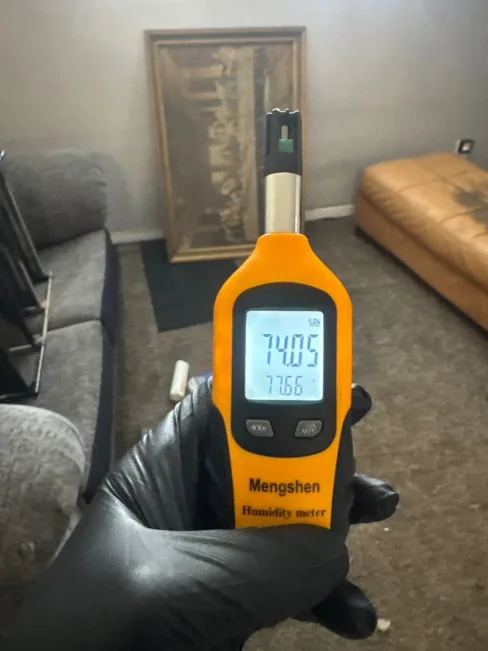
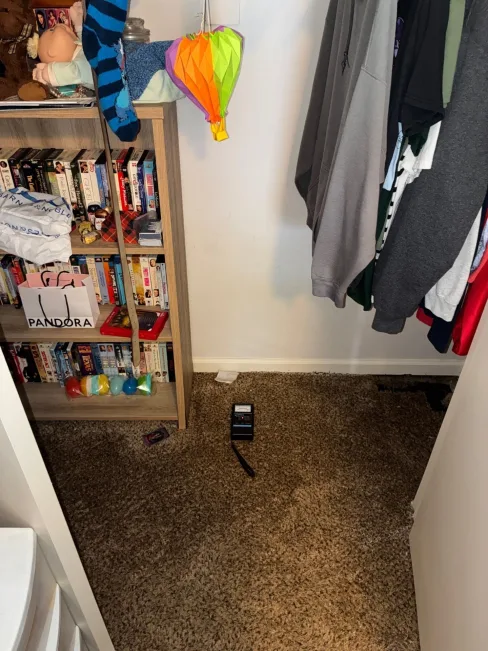
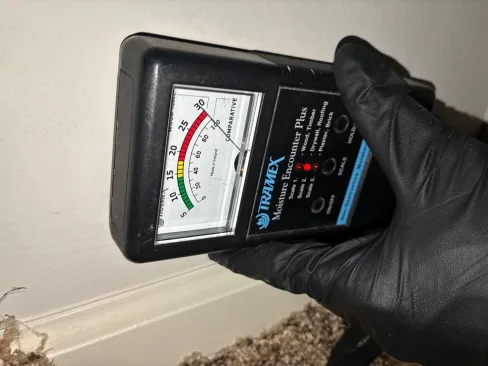
EMS crews documented the loss the way every EMS project starts: with instruments, not assumptions. Technicians metered floors, walls, and closets in each affected unit with a Tramex Moisture Encounter Plus, mapping how far water had wicked into drywall, bottom plates, and studs — including moisture that had traveled beyond what was visibly wet. Initial readings pegged the meter: concrete floor assemblies read 100 on the comparative scale against a dry standard of 20, and wall framing read 30 against standards of 12–13. Photo documentation captured each affected area, from mud-laden standing water at unit bathrooms to saturated carpet at patio doors and entry landings. That mapping produced the drying plan: nine defined chambers, each with its own equipment load calculated to IICRC S500 recommendations, each with its own set of monitoring points that would be read against material-specific dry standards until every one hit goal.
The Drying Plan
Nine chambers, one clock
Each affected area became its own controlled drying chamber with dedicated equipment, sized to the space and the saturation:
Building 49 — Apts 1 & 2 + Entryway
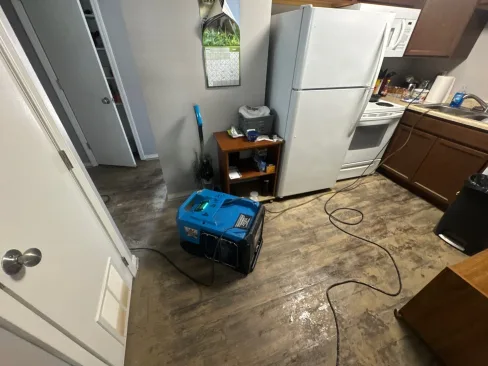
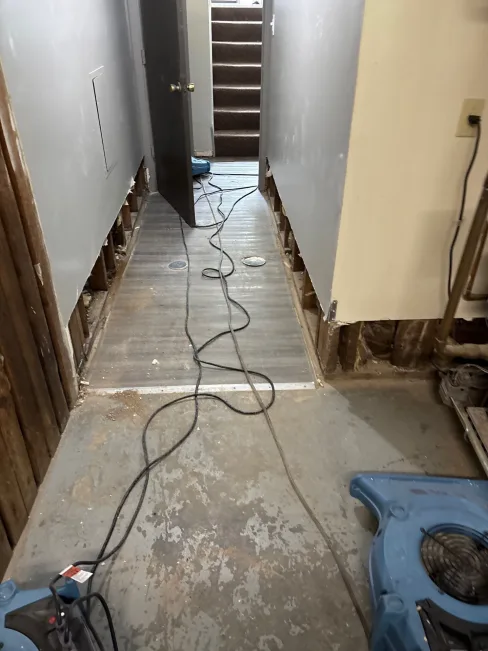
34 air movers, 3 dehumidifiers, 2 HEPA air scrubbers across two units and the shared entry.Building 47 — Apts 1 & 2 + Entryway
23 air movers, 3 dehumidifiers, 1 HEPA air scrubber.Buildings 27–29 — Basement
2 high-capacity dehumidifiers drying 1,100+ sq ft of concrete.Buildings 45 & 9 — Community Laundry
8 air movers and dehumidification across both rooms, where water had wicked up the walls.
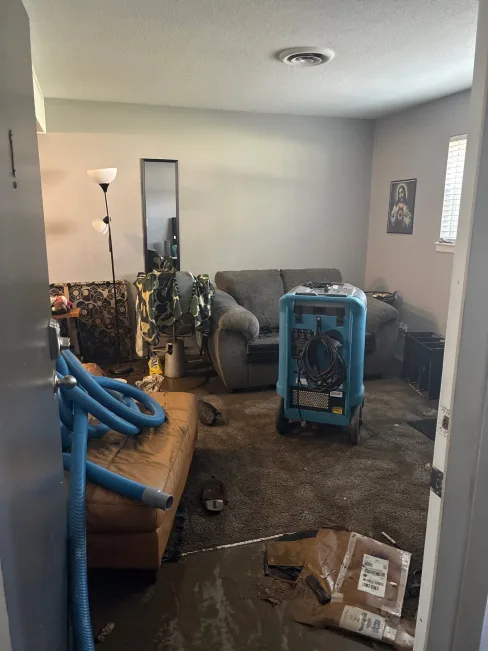
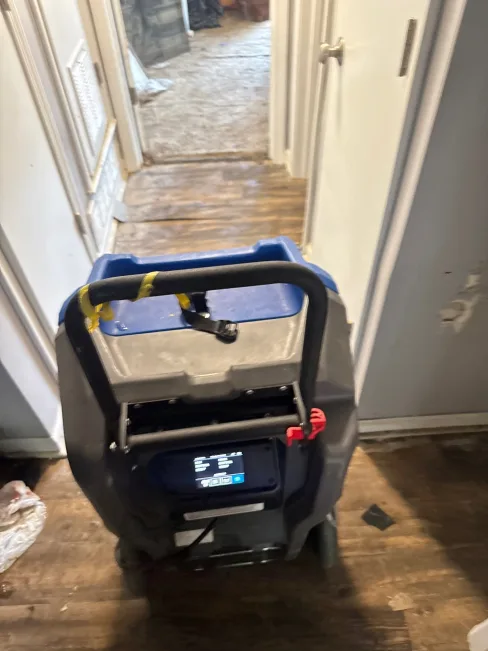
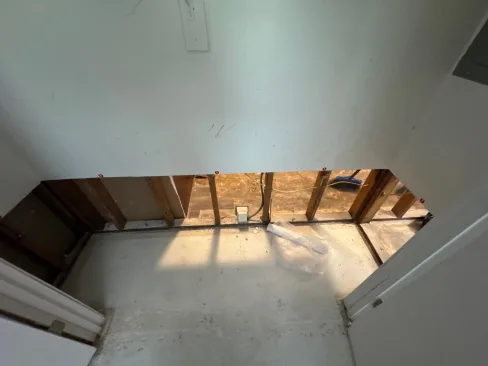
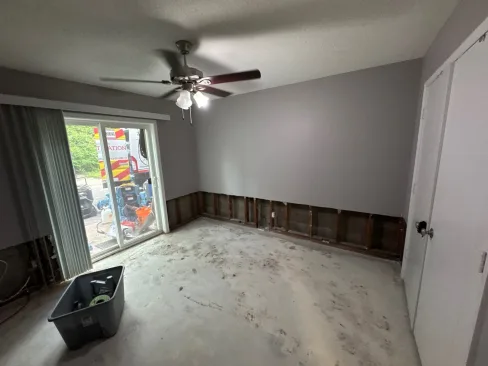
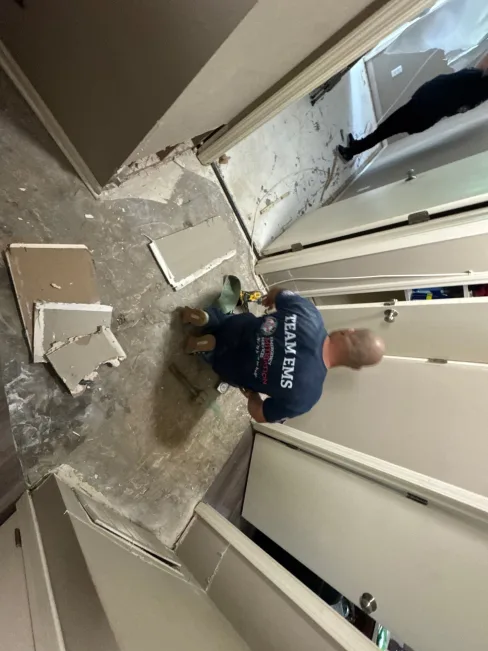
In total: 65 air movers, 9 dehumidifiers, and 3 air scrubbers running simultaneously, with electrical distribution boxes deployed to carry the load. Flood cuts were made to a uniform four-foot height in the affected apartments — removing contaminated drywall and insulation to expose wall cavities for drying — while saturated carpet and pad came out where the flood water had reached it.
Independent-Style Verification
Dry is a number, not an opinion
Every chamber carried defined monitoring points read with the Tramex against material-specific dry standards. This is the actual moisture-mapping progression from the project record:
| Material | Dry Standard | Jun 4 (Initial) | Final Reading | Status |
|---|---|---|---|---|
| Concrete floors | 20 | 100 | 20 | ✓ At standard |
| Wall bottom plates | 12 | 30 | 12 or below | ✓ At standard |
| Wall studs | 13 | 30 | 13 or below | ✓ At standard |
| Laminate flooring (Bldg 9) | 15 | 100 | 15 | ✓ At standard |
Readings were logged across six documented monitoring dates from equipment set on June 4 through final verification on June 11, with an outside-air baseline (82°F / 60% RH) recorded for comparison. Concrete, the slowest-drying material on the project, walked down from pegged readings to standard in five to six days; framing followed; and on June 11 the last bottom plates and studs hit goal in the same reading round.
Sanitation
Flood water isn’t just wet. It’s contaminated.
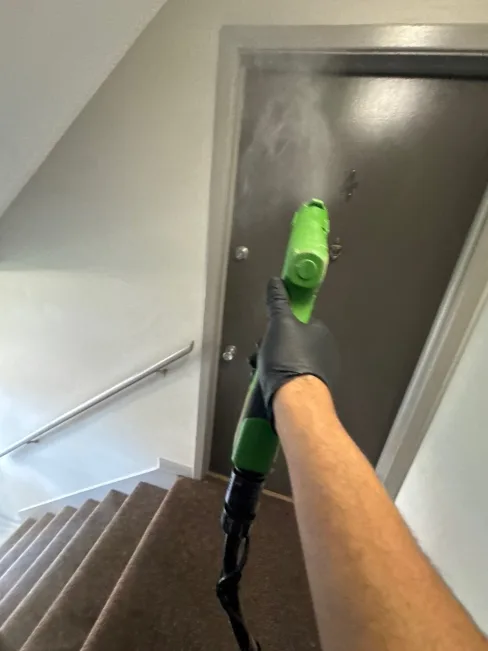
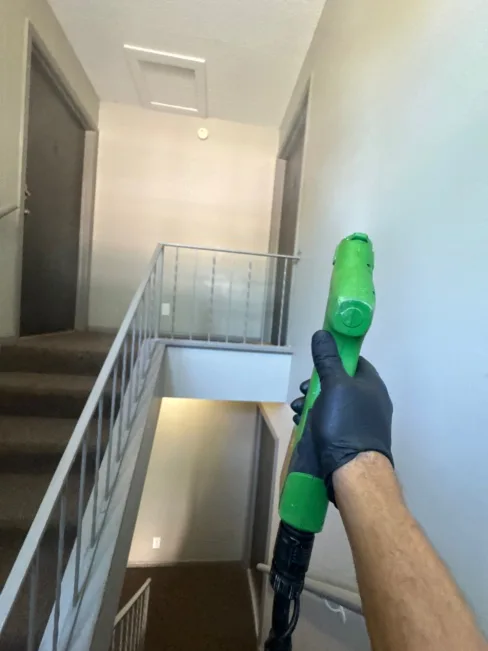
Rising flood water is Category 3 by definition — it carries soil, sewage-adjacent contamination, and whatever the storm picked up on its way in. Drying alone doesn’t make a Cat 3 loss safe. After extraction and material removal, EMS crews cleaned affected surfaces and applied antimicrobial treatment by electrostatic fogging through the affected units, stairwells, and common areas, while HEPA air scrubbers ran in the heaviest-hit chambers to capture airborne particulate during demolition and drying. Shared spaces — the entryways and laundry rooms every tenant walks through — got the same treatment as the units.
Working Around Tenants
Mitigation in occupied homes
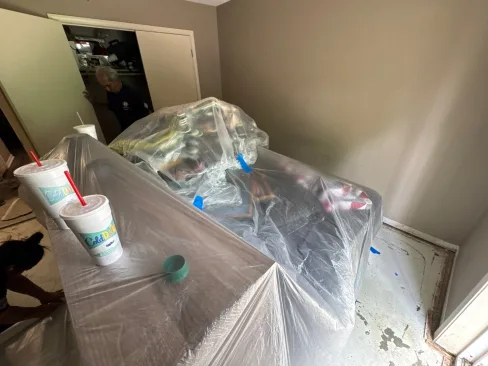
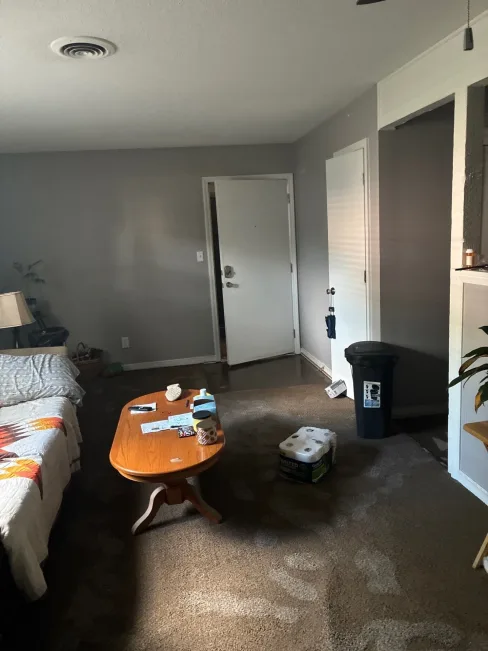
Every unit on this project was someone’s home, and it stayed that way through the work. Furniture and belongings were consolidated and protected in place rather than hauled to storage. Contents in the water’s path were lifted, wrapped, or moved to dry rooms. Flood cuts were kept to the uniform height the contamination required — no more — and walkways stayed passable around equipment placements.
It’s slower to work this way. This distinction highlights what separates a mitigation project from an eviction.
Equipment & Technology
What we deployed across five buildings
- Truck-mounted extraction — flood water and mud extracted from units, entries, and the basement before drying began.
- Centrifugal air movers (65) — positioned per IICRC S500 airflow recommendations for each chamber.
- Phoenix LGR dehumidifiers (9) — including Phoenix 200 HT and DryMAX units matched to chamber volume.
- 500 CFM HEPA air scrubbers (3) — airborne particulate capture in the heaviest-affected units.
- Tramex Moisture Encounter Plus — non-invasive moisture mapping of concrete, framing, and flooring against defined dry standards.
- Electrostatic antimicrobial fogging — EPA-registered antimicrobial applied across all affected and shared areas.
- Electrical distribution boxes — dedicated power management to run 70+ pieces of equipment across five buildings safely.
Our Process
From extraction to verified dry in six steps
Extract & remove
→
Moisture map
→
Flood cuts
→
9-chamber dry
→
Sanitize
→
Verify dry
EMS ran nine drying chambers simultaneously across five buildings while keeping occupied units livable.
1
Emergency response & extraction
Standing flood water and mud extracted from all nine affected areas using truck-mounted equipment.2
Moisture mapping
Every affected room metered and documented with the Tramex; drying chambers and monitoring points defined against material-specific dry standards.3
Controlled demolition
Flood cuts to a uniform four-foot height — contaminated drywall, insulation, carpet, and pad removed to expose wall cavities for drying.4
Nine-chamber drying
65 air movers and 9 dehumidifiers run simultaneously, monitored against material dry standards across six documented reading dates.5
Cleaning & sanitation
Surfaces cleaned and antimicrobial fog applied by electrostatic sprayer across units, entries, laundry rooms, and stairwells.6
Verification & demobilization
Final Tramex round confirmed every monitoring point at or below its dry standard before equipment was pulled on June 11.Results & Outcome
Every chamber verified dry. Tenants stayed home.
- Every chamber verified dry — all monitored materials (concrete, bottom plates, studs, laminate) at documented dry standard by June 11.
- Tenants stayed housed — occupied units mitigated with belongings protected in place; no displacement beyond what the flood itself caused.
- Contamination addressed, not just moisture — Category 3 protocols followed through demolition, cleaning, and antimicrobial fogging.
- Ready for rebuild — flood cuts left clean, dry, documented wall assemblies ready for the reconstruction phase.
Project Images
From flood water to verified dry
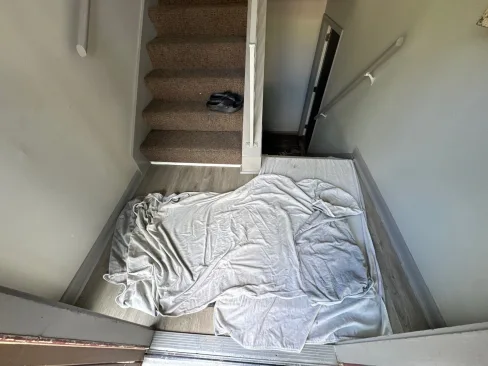
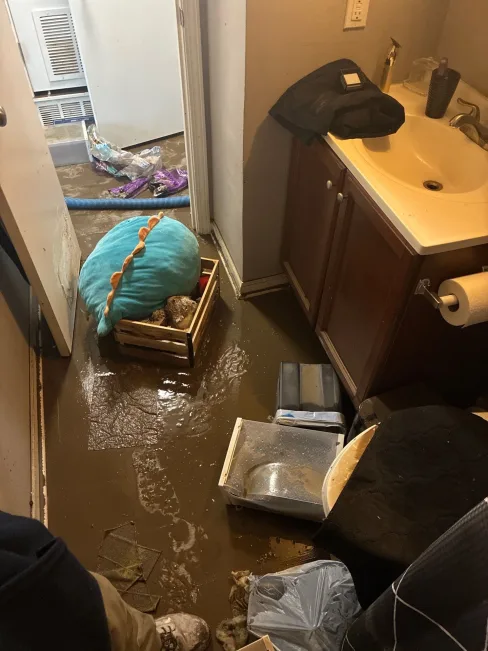
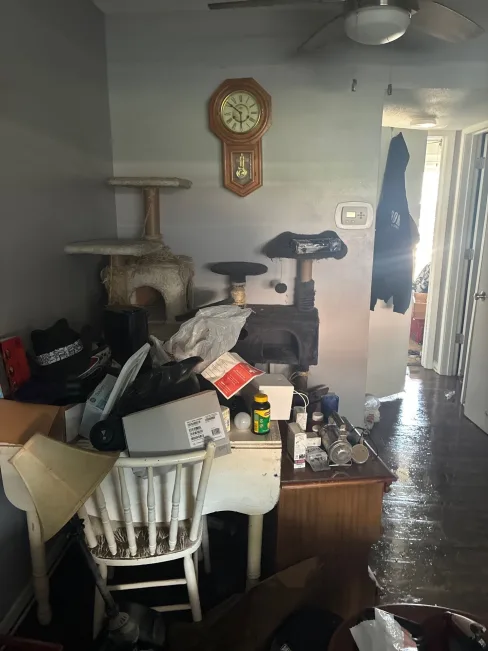
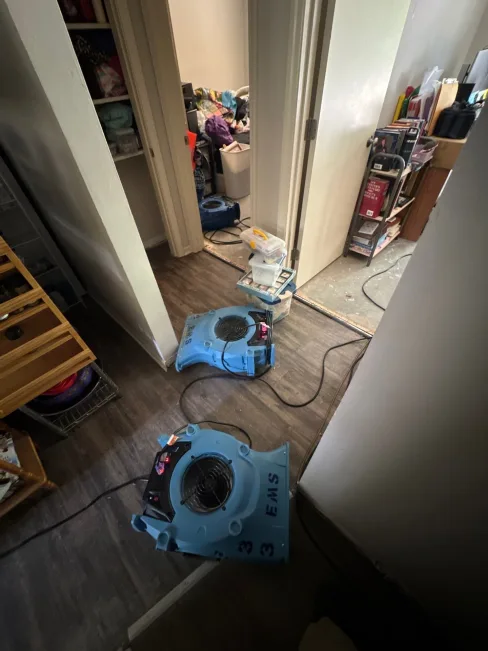
Questions, Answered
Apartment flood mitigation: what people ask
What category of water is rising flood water?
Rising flood water is Category 3, the most contaminated classification in the mitigation industry under IICRC S500. It carries soil, debris, and potential sewage contamination, which is why affected porous materials like drywall and carpet are removed rather than dried, and why antimicrobial treatment follows the drying work.
Why cut the drywall at four feet?
Flood cuts are made to a uniform height above the visible water line — commonly four feet — to remove contaminated material, expose wall cavities for drying, and leave a clean, straight line for reconstruction. Drywall wicks water upward beyond where the flood visibly reached, so the cut height is set by moisture readings, not by the water line alone.
How do you dry nine areas across five buildings at the same time?
Each affected area becomes its own drying chamber with equipment sized to its volume and saturation per IICRC S500 recommendations. This project ran 65 air movers, 9 dehumidifiers, and 3 air scrubbers simultaneously, with dedicated electrical distribution to carry the load, and each chamber was monitored against its own dry standards until every reading hit goal.
Can tenants stay during flood mitigation?
It depends on the scope and contamination, but on this project, yes — belongings were protected in place, walkways stayed passable, and the work was sequenced around occupied units. Keeping residents housed is a planning constraint EMS builds into multi-family losses whenever conditions allow it.
How did EMS verify the buildings were actually dry?
Every chamber carried defined monitoring points read with a Tramex Moisture Encounter Plus against material-specific dry standards — 20 for concrete, 12 for bottom plates, 13 for studs, 15 for laminate. Readings were logged across six monitoring dates, and equipment came down only after the final round showed every point at or below standard.
Does insurance cover flood damage in apartment buildings?
Coverage depends on the policy — rising-water flood losses are handled differently than burst-pipe losses and often involve separate flood coverage. Emergency Mitigation Services is a mitigation contractor, not a public adjuster, and doesn’t advise on policy interpretation. EMS documents the loss thoroughly — moisture maps, photos, equipment logs — so property owners have an objective record for their carrier.